

athenaOne
Transform your practice with athenaOne®—an all-in-one EHR solution that enhances efficiency, boosts profitability, and elevates patient engagement.
Key Insights
Derived from customer feedback, athenaOne® serves as an all-in-one solution tailored for independent medical practices. It integrates electronic health records (EHR), revenue cycle management, and patient engagement tools. Although the initial setup can take some time, the automation powered by artificial intelligence significantly enhances both efficiency and profitability. Recent enhancements to the athenaPatient application have enriched the telehealth experience by enabling patients to access virtual appointments directly through the app.
Our Assessment
athenaOne stands out as an excellent choice for healthcare practices of medium to large size that are in search of a cohesive platform for managing clinical, financial, and operational tasks. Its cloud-based infrastructure, ability to interoperate with other systems, and support for revenue cycle management make it particularly advantageous for organizations aiming for growth and integrated care. While smaller practices might find the pricing model and onboarding process somewhat challenging, this platform ultimately delivers substantial long-term benefits for teams that emphasize efficiency, regulatory compliance, and optimizing revenue.
What Is athenaOne?
athenaOne®, developed by athenahealth, stands out as an all-encompassing solution designed for healthcare practices aiming to maintain their independence. It features electronic health record (EHR), revenue cycle management, and patient engagement tools, empowering users to provide optimal care alongside favorable business results.
athenaOne streamlines the payment process, enabling practices to receive their dues more swiftly and with reduced effort. Regardless of the complexities involved in reimbursement, the solution simplifies the pathway to payment. With an extensive 30K+ rules in its billing framework, athenaOne aids clients in minimizing costly claim mistakes with minimal additional effort or expense. In line with athenahealth's unique business model, the company only earns when its clients do.
Additionally, athenahealth's products contribute to an easier experience for both practices and their patients. The highly-rated mobile application offers clinicians the flexibility to work from any location. The integrated patient engagement tool enhances patient experiences throughout the entire journey — from scheduling appointments to receiving results and making payments. Over a span of 12 months, patients utilized athenaOne's self-scheduling features to book in excess of 3.8 million appointments. Furthermore, the platform was honored with the 2026 Best in KLAS award for Ambulatory EHR, 11-75 Physicians, Independent, showcasing its noteworthy performance among independent healthcare providers.
What Is athenaOne Best For?
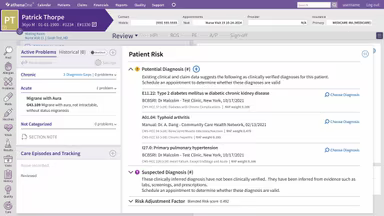
This user-friendly EHR is tailored to align with the natural thought processes of clinicians, catering to the specific needs of specialists. By seamlessly integrating patient information from external sources directly into the workflow, athenaOne allows users to have a holistic view of their patients, which leads to improved patient outcomes. The platform highlights gaps in care and diagnosis data at critical moments, enabling practices to thrive in a value-based care model. Clinicians utilizing athenaOne exceeded the industry average across various electronic clinical quality measures in 2023.
How Much Does athenaOne Cost?
Typically, the pricing for athenaOne begins at approximately $140 per provider each month and may range from 4% to 8% of a practice’s total monthly collections. The cost of the athenahealth EMR is influenced by the organization's collections and adjusts as patient volumes change. Price variations may also occur based on specialty, number of users, and selected modules.
Beyond the standard subscription fees, organizations should account for these estimated additional costs when considering athenaOne:
Implementation And Setup: Generally ranging from $15,000 to $40,000, this covers system deployment, workflow configuration, onboarding, and customization for specific practices.
Data Migration: Typically costs between $500 and $25,000, dependent on the volume and complexity of transferring patient records and legacy data.
Training And Onboarding: Generally falls within $500 to $5,000 for provider education and workflow adoption support.
Integrations And Order Transmission: Commonly begins at $150 per month, with transaction fees varying from $0.45 to $1.00 per order, based on selected packages and integration requirements.
Specialty-Specific Configuration: Prices may rise for practices needing advanced workflows or specialized templates, particularly in fields like behavioral health, cardiology, orthopedics, and dermatology.
Ongoing Premium Support And Optimization: Estimated at $2,000 to $10,000 annually for enhanced support, reporting aid, and dedicated account management.
Generally, buyers view the platform as comprehensive, though potentially high-cost for smaller practices. Reach out to us for a customized athenaOne pricing overview tailored to your business requirements.
Disclaimer: Pricing information is based on publicly accessible third-party data and industry benchmarks. Actual costs may differ.
athenaOne Integrations
The software provides seamless connectivity via the athenahealth Marketplace, allowing practices to link up with over 300 applications. Some third-party integrations include:
Entrada
ChartRequest
WebPT
TruCode
ChartSwap
How Does athenaOne Work?
athena EMR is accessible through web browsers or its mobile app. Healthcare providers must follow these steps to use the athenahealth software:
Log in via a web browser or the athenaOne mobile application using your provider account.
Access the cloud-based system, which securely stores all patient and practice information, available on any device connected to the internet.
Navigate to the patient record functions to review medical histories, document encounters, and update records in real-time.
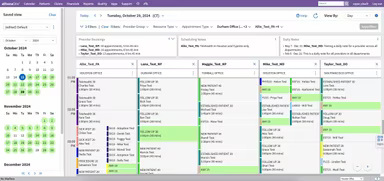
Utilize scheduling tools to book, modify, or confirm patient appointments while coordinating with the care team’s calendars.
Manage billing and revenue cycle activities, including claims submission, payment posting, and financial reporting within the athena billing system.
Coordinate care with other providers and team members by instantly sharing records, results, and treatment notes.
Switch to the mobile app to document visits on the move using templates, macros, and order sets to expedite note-taking.
Engage with patients through communication tools for reminders, follow-ups, and secure messaging.
Schedule a complimentary athenaOne demo to explore its features further.
Who Is athenaOne For?
The EMR solution is tailored for independent medical practices and ambulatory care centers of all scales. It supports various medical specialties and can be utilized by healthcare providers operating in multiple settings, from primary care to specialized and hospital-based environments. It suits organizations of varying sizes, encompassing small practices to larger hospitals.
Here are some of the practices it supports:
Hospitals and health systems
Medical startups
Member-centric organizations
Ancillary service organizations
Internal medicine
Family medicine
Special practices
Beyond being a versatile EMR, it particularly addresses the needs of:
Pediatrics
Cardiology
FQHC
Orthopedics
Gastroenterology
Mental & Behavioral Health EMRs
How Is athenaOne Different From Other Software?
With a variety of EMR options in the marketplace, selecting the right fit can be challenging. What distinguishes athenahealth is its network-based, service-focused business model. Unlike numerous EMRs that merely function as software, athenahealth delivers a comprehensive service featuring a constantly updated network of over 30,000 billing rules.
Moreover, its continual introduction of AI and machine learning technologies places it ahead of many in the tech innovation race. It has consistently been recognized as a "Best in KLAS" contender, affirming its reliability and high user satisfaction.
Here are additional factors that differentiate athenahealth from other notable EMR systems:
Cloud-Based: The athena platform operates on a cloud-based architecture, meaning all data is stored remotely and can be accessed from any device connected to the internet. This contrasts with on-premises systems that necessitate user installation and server maintenance.
Integrated Platform: The athenahealth EMR includes an array of features and tools designed to function cohesively, such as patient records, scheduling, billing, and care coordination. This integrated model facilitates smoother management of all patient care aspects within one platform.
Customization Options: Athena EMR permits users to adjust certain system elements, like the format and look of patient records. This can be advantageous for those wanting to tailor the system to meet their practice's specific requirements.
Customer Support And Training: athenahealth offers support and training resources to help users maximize the platform's potential, particularly beneficial for those new to EMR systems.
athenaOne Use Cases
Drawing from user feedback on Software Finder and our thorough analysis, athenaOne is well-suited for the following scenarios:
Cloud-Based Clinical Efficiency: athena EHR is optimized for organizations seeking to enhance clinical workflows using a cloud-native platform. Its online interface allows providers to access patient data, document visits, and manage care plans from nearly any location. Users frequently commend the system's speed, automatic updates, and reduced need for local IT infrastructure. For practices prioritizing both mobility and operational flexibility, athena’s EHR stands out as a dependable, scalable solution.
Data Sharing And Interoperability: athena medical records excel in situations where data sharing across various systems is crucial. Its EHR supports interoperability with laboratories, imaging venues, pharmacies, and other EHR platforms. The national network facilitates real-time information sharing among patients, which is especially valuable for practices engaged in coordinated care or referrals. User reviews of athenahealth often highlight how athenahealth simplifies collaboration and enhances care continuity.
Documentation And Reduced Provider Burden: athena EMR is ideal for practices aiming to cut down on time devoted to documentation and administrative tasks. Features such as customizable templates, voice-to-text functionality, and automated coding recommendations expedite note completion with greater accuracy. Many users report that these features alleviate burnout and boost clinical productivity. For busy practices, the software’s documentation capabilities can greatly enhance provider satisfaction and workflow efficiency.
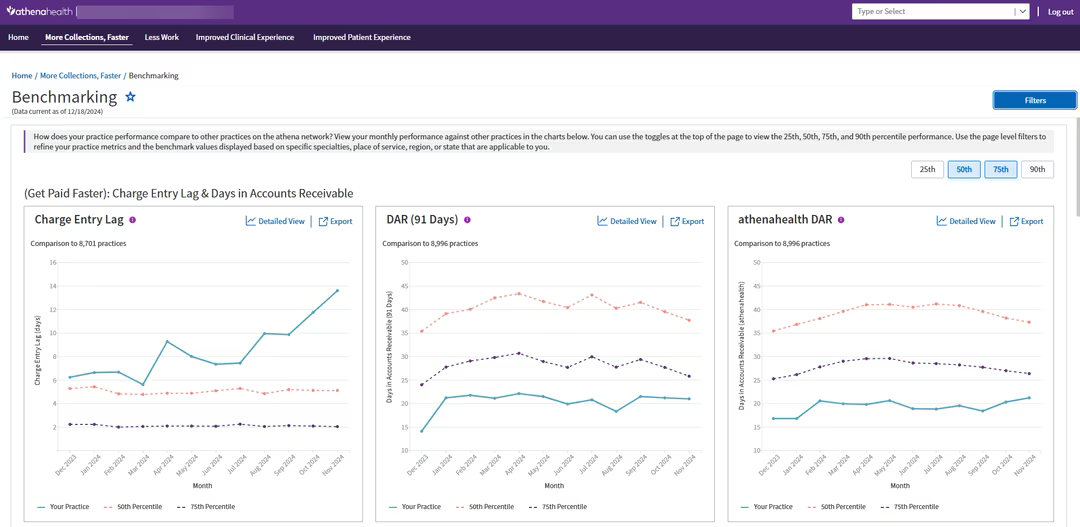
Reporting And Compliance: athenaOne aids practices participating in value-based care initiatives by providing built-in tools for quality reporting, MACRA/MIPS compliance, and population health management. The EHR contains dashboards and analytics that facilitate performance metric tracking and care gap identification. Users value the proactive alerts and reporting features that simplify regulatory compliance management. For practices focused on improving outcomes and reimbursement strategies, athenahealth offers a data-informed foundation.
athenaOne User Sentiments
Most Positive Sentiments
Usability & Navigation: 75% were Positive, 18% were Negative, 7% were Neutral/Mixed.
Performance & Speed: 15% were Positive, 78% were Negative, 7% were Neutral/Mixed.
Users commend athenaOne for its user-friendly navigation and organized interface that minimizes clutter. They appreciate having scheduling, charts, and records consolidated in one location, along with templates and intake workflows that enhance efficiency. A few comments indicate that navigation can be cumbersome, particularly when switching between charts or extracting reports.
Common frustrations relate to slow response times, freezing, and lagging, especially when managing large datasets or post-updates. Although a minority note performance improvements in recent updates, overall sentiment remains negative.
Functionality & Feature Richness: 80% were Positive, 12% were Negative, 8% were Neutral/Mixed.
Initial Training & Complexity: 14% were Positive, 76% were Negative, 10% were Neutral/Mixed.
Reviewers frequently highlight the extensive range of features, including charting, billing, scheduling, reporting, and the patient portal. Many find the reporting and analytical components particularly robust and value the integration of clinical and administrative tools. However, some users express that specific features may feel less refined or buggy, with updates occasionally disrupting established workflows.
A significant number find athenaOne challenging for newcomers. The broad array of features and multi-step workflows can appear overwhelming, and navigating between sections is not always seamless. More experienced users often share that the system becomes easier to manage once they become familiar with it.
Customer Support & Training: 70% were Positive, 20% were Negative, 10% were Neutral/Mixed.
User Interface & Updates: 20% were Positive, 70% were Negative, 10% were Neutral/Mixed.
Users often describe customer support as prompt and effective, with valuable training resources available during onboarding. Some appreciate having dedicated support contacts. Negative feedback generally pertains to inconsistent response times or inadequate documentation accompanying new features.
Users criticize the interface as being outdated or unintuitive. Frequent updates lead to dissatisfaction, with design modifications perceived as disruptive rather than beneficial. That said, some users acknowledge that newer layouts look cleaner, although most believe the interface detracts from productivity.
Is athenaOne Right For You?
The software has gained traction among a range of medical professionals, organizations, and practices. Serving the US medical community for over 20 years, athenaOne is suitable for healthcare entities of all sizes and specialties, facilitating high-quality care through streamlined processes and reliable data access.
Moreover, athenahealth’s holistic approach extends beyond clinical care, providing patient engagement solutions that enhance financial efficiency and revenue management. By utilizing financial data to refine billing accuracy and monitor financial health, the platform empowers practices to optimize revenue cycles and profitability. For groups focused on efficient billing and revenue enhancement, athenahealth continues to be a strong option.
With over 160,000 providers utilizing their extensive, interconnected network, practices using athenaOne EHR have access to unmatched resources for success alongside the insights necessary to improve business performance and outcomes.
Additionally, athenahealth EMR emphasizes compliance by automatically updating its platform to adhere to evolving regulations. The system also provides ongoing support and enhancements to ensure healthcare providers stay compliant with industry standards.
Still uncertain whether athenaOne is a fit for your business? Call us at (661) 384-7070 for assistance in making the right choice.